


Destruction Guide
- acolytesepilogue
- Jul 12, 2025
- 5 min read

Updated: Dec 22, 2025
Revamping and clarifying the often vague Destruction levels We use in Calculations
3 types Deformation / Structural failure
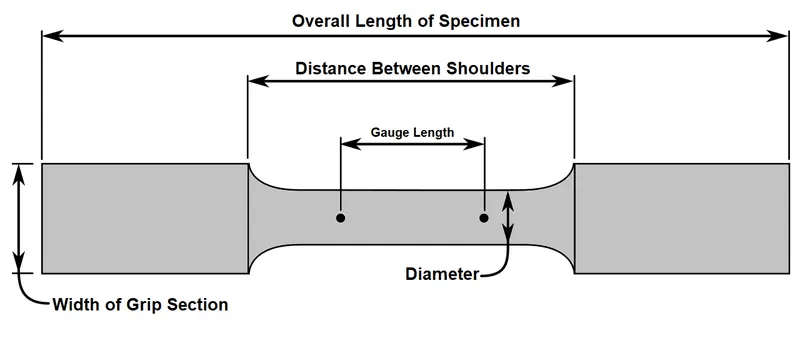
Pulling apart also known as the Tensile strength of the Material ( Rock 9.9MPa )


branding a material which the Shear strength and squishing a material which is the Compressive strength , which all 3 doesn't necessarily result in the material being made into multiple pieces ( Rock 8MPa or 69MPa respectfully)

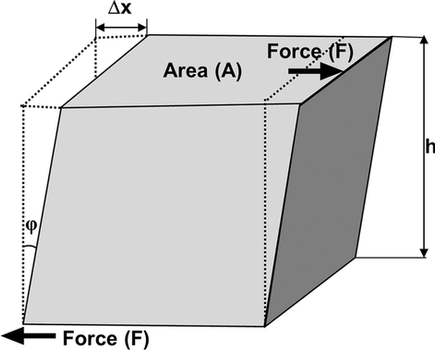
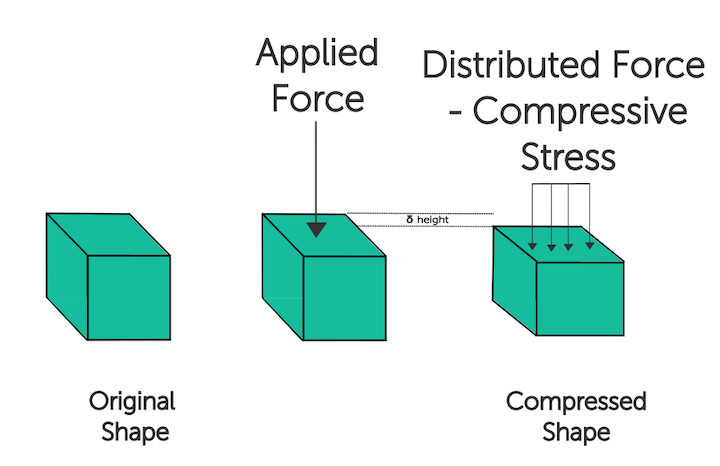
VSBW takes the MPa of the materials and and converts them to Joule by displaying the Pressure through a length of 1 meter and for example Rock 8 MPa = 8 million newton per meter square and 8 million newton per square meter displayed over a meter is equal to 8 million joules and as we have a square meter going through another meter that defines a volume of 1meter cubed and we have 8 million joule per meter cubed but as 1 meter cube is also 1 million centimeter cubed it is further converted to 8 joules per centimeter
but because of the of this simplification it obscures what is happening with the modes of failure
using shear strength as an example
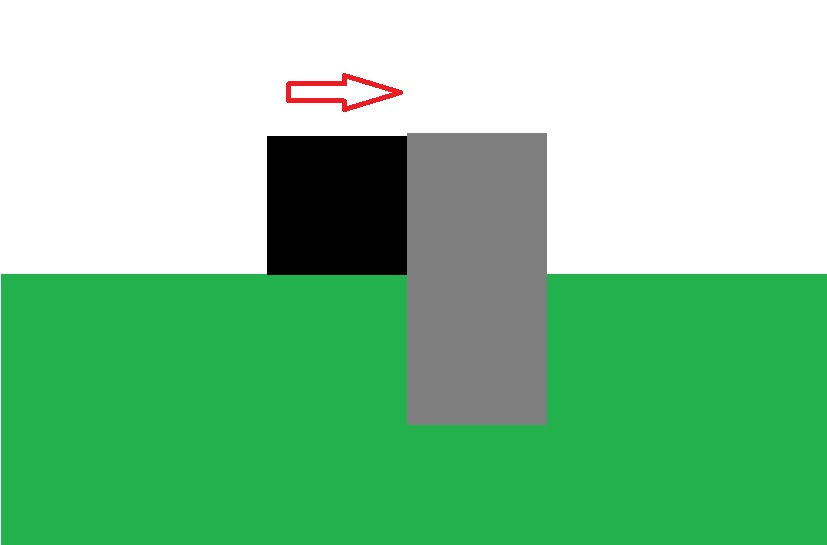
say a 1m^3 of steel is moving at a speed that makes one of its areas of 1m^2 connect with a 1m by 1m by 2m stone wall with slightly higher force than the shear strength of stone than when it makes contact the middle of the 2m length and the stone wall under goes shear the steel and now 1by 1 by1 m cube stone keep moving but at a greatly deceased speed compare to the starting speed of the steel cube
but if the cube is large say 3m by 3m by 1m than to shear the middle of the stone wall than we need the shear strength for each side of the 1m by 1m by 1m cube in contact with 3m by 3m by 1m stone wall which would be 4 sides or 4 m^2 and would require the steel cube to have 4x the shear strength of stone to punch through the wall
and if you try to separate a stone cube from the middle of a larger cube you would have to break apart the cubes around it some connecting to 3 other cube others connecting to 4 or 5 if you count the middle cube and when you get to the middle cube it would take 6x the type of failure mode relative to trying to separate 2 cubes from each other on
modes of failure doesn't necessarily equate to a level of damage i.e. how big or small some material is broken into, so what we will be doing is going with the the most applicable failure mode which is tensile strength as compression and shearing are very circumstantial , which is 9.9 mpa for Rock, and multiplying it for the increase of area of the smaller the piece compared to the larger piece , a 1m^3 cube has an area of 6m^2 well the same volume of 1cm^3 cubes is 600m^2
VSBW Fragmentation is equal to the shear strength (Rock 8 J/cm^3 or 8MPa) , Our Fragmentation destruction level will be base line tensile strength (9.9 J/cm^3 or 9.9 MPa )

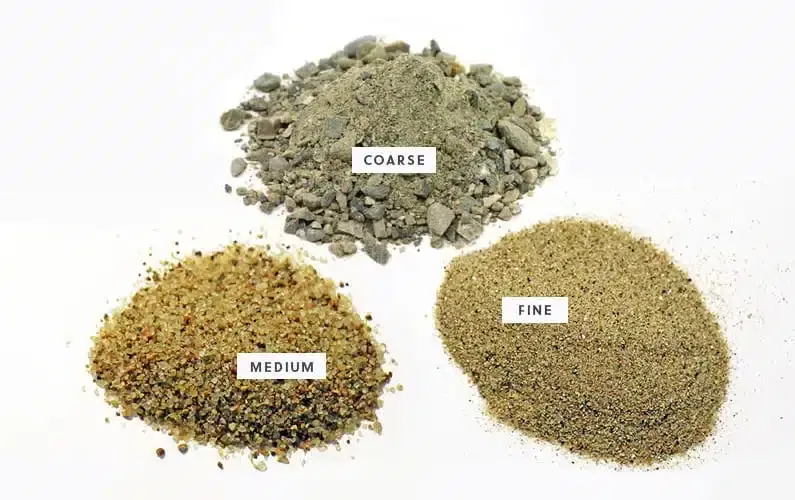
VSBW Violent Fragmentation is equal to the low end Compressive strength ( Rock 69 J/cm^3 or 69MPa ), Our Violent Fragmentation destruction level will be reducing a 1m^3 of material into a 5cm cubes which is 120m^2 / 6m^2 which is a 20x increase the surface area (Rock 198 J / cm^3 or 198 MPa )

VSBW Pulverization is equal to the yield Compressive strength which is when the compression of the material results in splitting (Rock 214MPa ) , Our Pulverization Destruction level will be reducing a 5cm cube of a material to 1cm^3 cubes 750cm^2 /150cm^2 which is a 5x increase in the surface area (Rock 990 J / cm^3 or 990 MPa )
Melting / Energy of Fusion is equal to the energy required to turn a Material from solid to Liquid ( Rock 6,174.5 MPa )

Vaporization / Sublimation is equal to the energy required to turn a martial from solid to Gas ( Rock 25,700 MPa )

Atomization / splitting to the unsplittable is the energy required to turn a martial into free floating Atoms that are not connected to other Atoms (Rock 30,852.2MPa)

Subatomic Destruction / splitting the unsplittable is the energy required to reduce all the atoms of a material to the component Elementary particle of the atoms (Rock 5.403x10^13MPa )

Not a Destruction Level , but overcoming the GBE of any reasonable size object where a GBE calculation would be relevant results in a MPa between Atomization and Subatomic Destruction
redoing the table of all Materials to bring it in line with these definitions will take a lot of time and the table will be slowly updated as time goes on , we will try and put all the source at the bottom of the table (link to VSBW destruction tables)
Material | Shearing | Compressing | Fragmenting / tensile /cracking | Violent Fragmenting | Pulverizing | Melting | Sublimating | atomizing | Subatomic splitting |
Generic Rock | 8 MPa | 69 MPa | 9.9 MPa | 198 MPa | 990 MPa | 6,174.5 MPa | 25,700 MPa | 30,852.2 MPa | 5.403x10^13 MPa |
13.5 MPa | 5.72 MPa | 5.31 MPa | 106.2 MPa | 531 MPa | |||||

Comments